
Some images on this website are created using AI. These images are intended for illustrative and creative purposes only and are not meant to depict or represent any actual person.

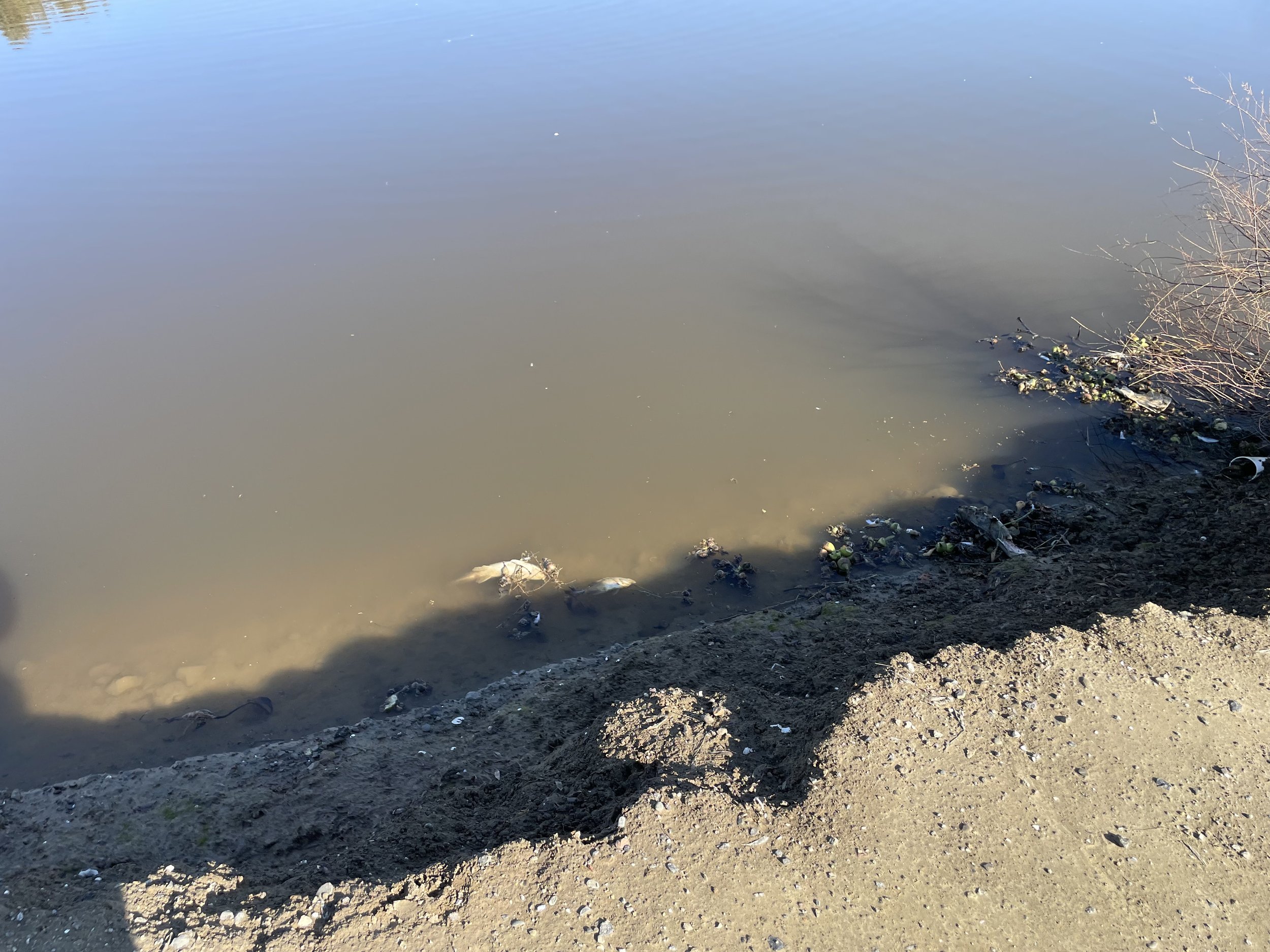
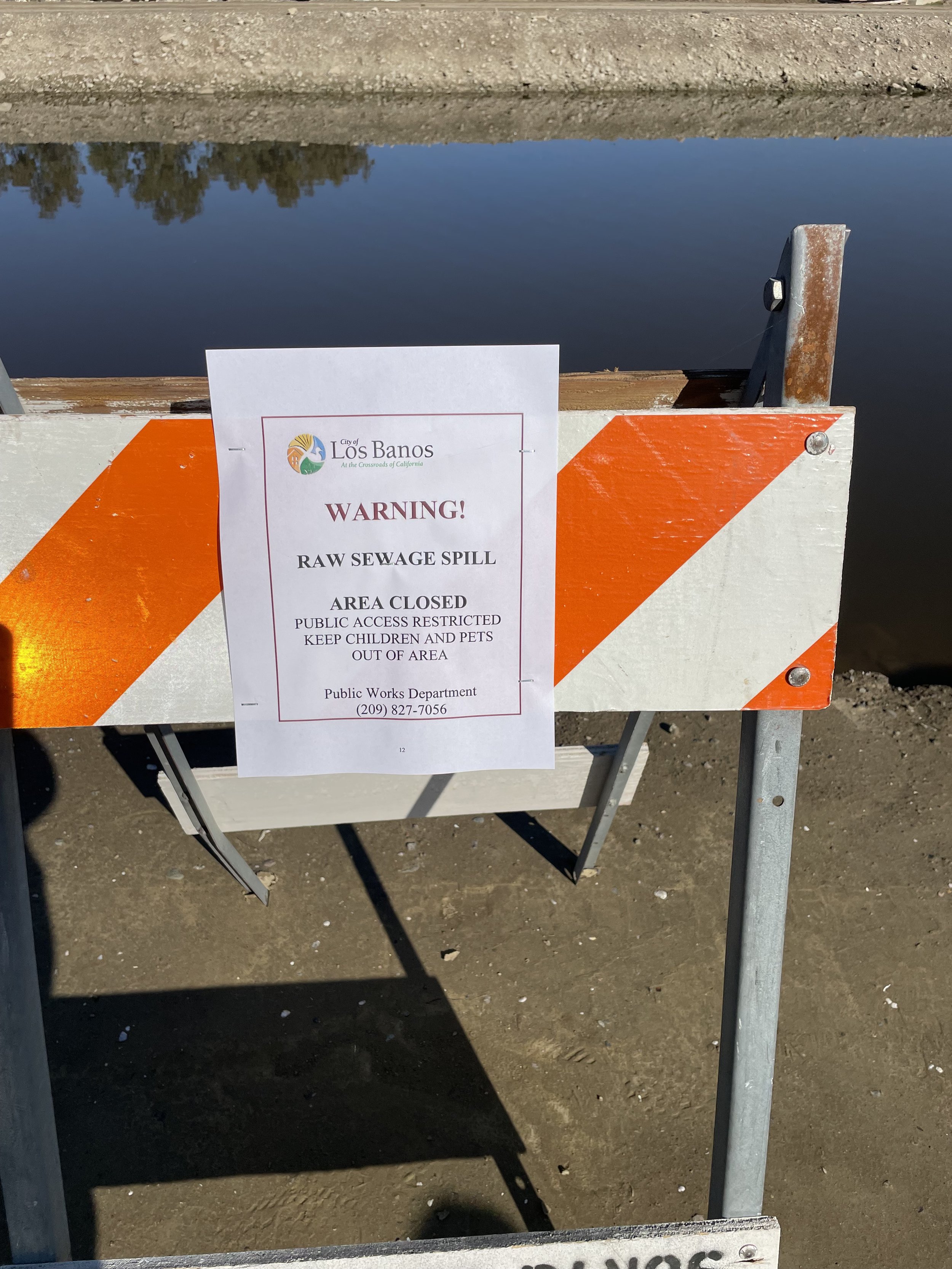
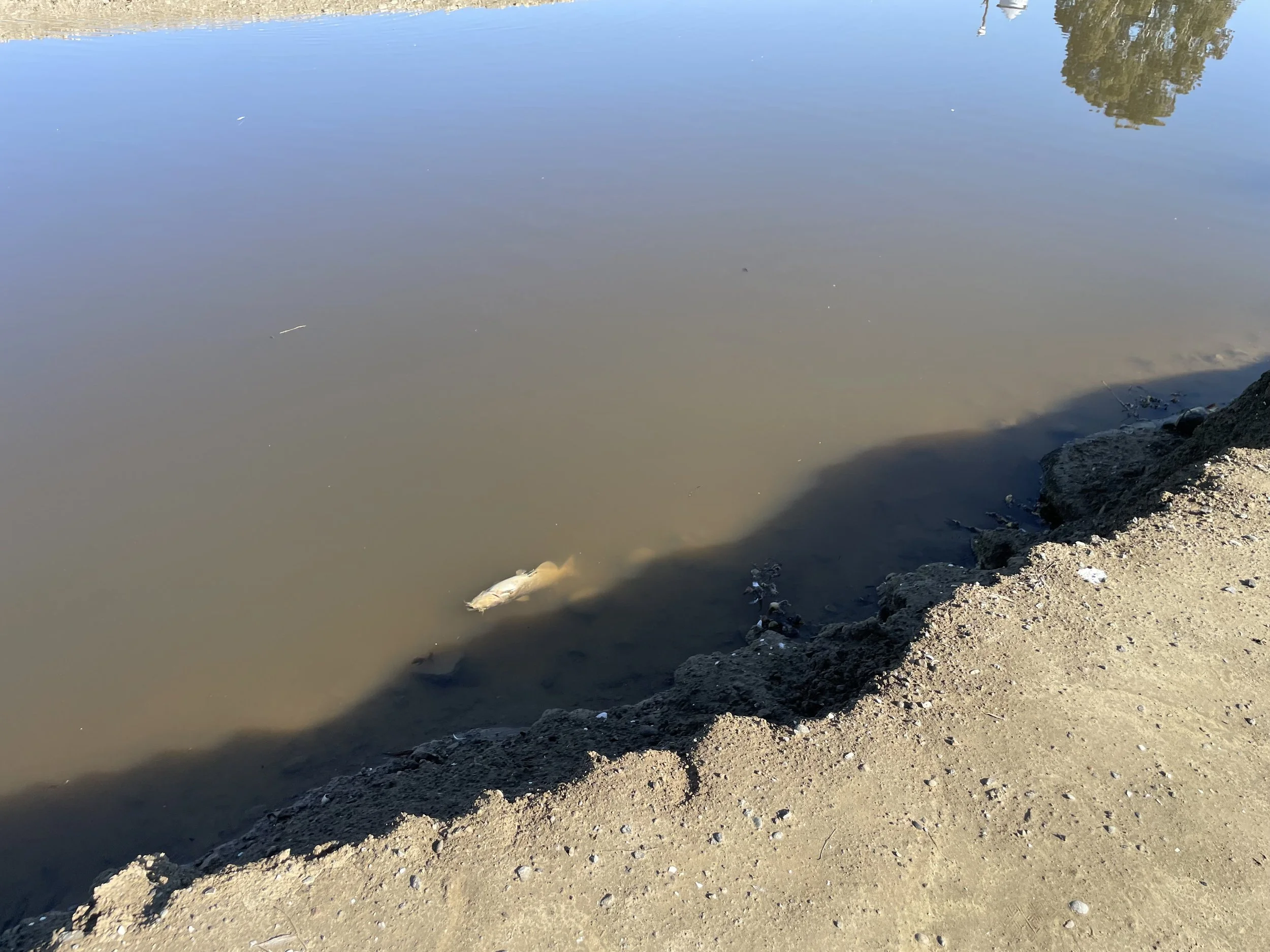
Check out our canal!
Learn about our water!

Review of the 2024 City of Los Banos Drinking Water Consumer Confidence Report
Executive Summary
The 2024 City of Los Banos Drinking Water Consumer Confidence Report demonstrates that the municipal water system complies with current federal and state drinking water regulations. However, regulatory compliance should not be confused with optimal public health protection. Several contaminants of concern remain present in the water supply at levels that warrant closer public scrutiny, particularly arsenic, chromium, hexavalent chromium (Chromium VI), nitrate, and certain radiological contaminants.
While the report provides extensive technical data, it often emphasizes regulatory compliance without adequately addressing the potential long-term health implications associated with repeated exposure to contaminants that approach or exceed public health goals.
Major Areas of Concern
1. Elevated Chromium VI Concentrations
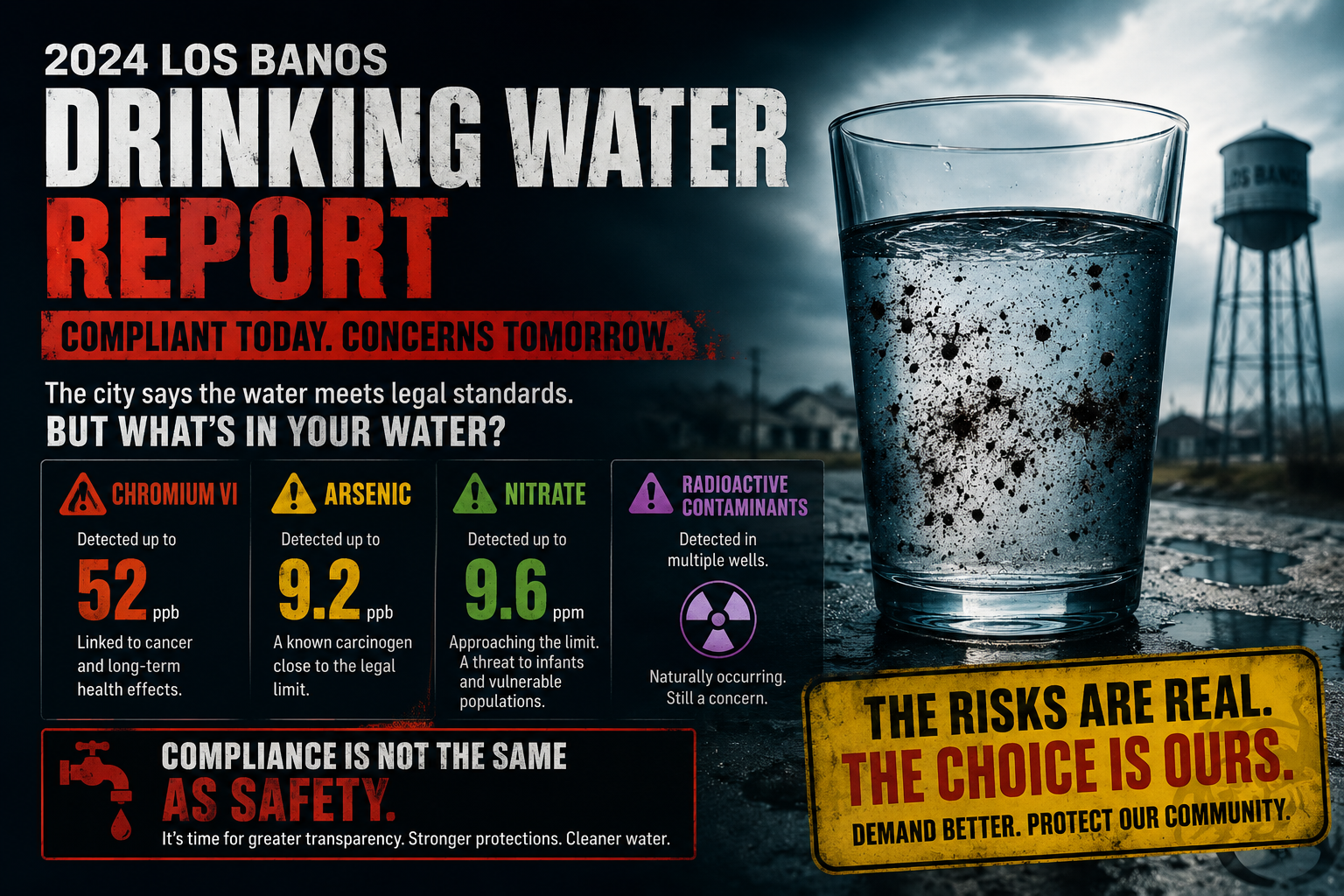
One of the most concerning findings in the report is the presence of Chromium VI at an average concentration of 32 parts per billion, with measured levels reaching as high as 52 parts per billion in some wells.
Although the city notes that Chromium VI is regulated through the broader Total Chromium standard, many public health experts consider Chromium VI to be significantly more toxic than other forms of chromium. The report acknowledges that Chromium VI can pose health risks but fails to provide residents with a meaningful discussion of the scientific controversy surrounding long-term exposure.
Residents deserve a clearer explanation of:
Which wells exhibit the highest Chromium VI concentrations.
Trends in Chromium VI levels over time.
Whether treatment technologies are being evaluated to reduce concentrations.
2. Arsenic Levels Near Regulatory Limits
The report indicates an average arsenic concentration of 6.7 ppb, with some wells reaching 9.2 ppb, close to the federal maximum contaminant level of 10 ppb.
Although the city states that the water meets regulatory standards, the report itself acknowledges that arsenic is a known human carcinogen. Public health advocates have long argued that the regulatory limit represents a compromise between health protection and treatment costs rather than a truly safe threshold.
The report fails to address:
Which neighborhoods receive water from higher-arsenic wells.
Whether arsenic concentrations have increased or decreased over time.
Long-term plans to further reduce arsenic exposure.
3. Nitrate Levels Reflect Agricultural Vulnerability
Nitrate concentrations ranged from 1.6 to 9.6 ppm, approaching the maximum allowable level of 10 ppm.
Given Los Banos' location in a heavily agricultural region, nitrate contamination is a significant environmental concern. Elevated nitrate levels are associated with fertilizer runoff, livestock operations, and septic system impacts.
While the report provides a health warning for infants and pregnant women, it does not adequately discuss:
Sources contributing to nitrate contamination.
Long-term groundwater sustainability.
Strategies to prevent future increases.
4. Limited Transparency Regarding Well-Specific Data
The report presents citywide averages rather than detailed well-by-well information.
This approach makes it difficult for residents to understand:
Whether certain neighborhoods receive water with higher contaminant concentrations.
Which wells contribute most significantly to arsenic, chromium, nitrate, or radiological measurements.
Whether specific sources may require treatment upgrades.
Providing only system-wide averages may obscure important variations throughout the water distribution system.
Secondary Concerns
1. Hard Water and High Mineral Content
The report identifies an average hardness level of 346 ppm and total dissolved solids averaging 723 ppm.
While these measurements do not typically pose health risks, they can:
Increase appliance wear.
Reduce water heater efficiency.
Cause scaling in pipes and fixtures.
Increase household maintenance costs.
The report does not discuss the economic burden these conditions place on residents.
2. Radiological Contaminants
The report detected naturally occurring radioactive contaminants including gross alpha particle activity and uranium.
Although levels remain below regulatory limits, the report provides little context regarding:
Long-term exposure considerations.
Variations among wells.
Future monitoring plans.
Residents may reasonably expect additional explanation when radioactive materials are detected in drinking water.
3. Communication and Public Engagement Deficiencies
The report contains extensive technical terminology that may be difficult for the average resident to interpret.
Several opportunities for improved public communication include:
Plain-language explanations of health risks.
Visual trend data showing changes over time.
Comparisons with public health goals rather than only regulatory limits.
Maps showing contaminant concentrations by well or service area.
Discussion of future treatment investments and infrastructure improvements.


Agricultural Pesticide Use and Air Quality Concerns in the Los Banos Area
Los Banos is surrounded by thousands of acres of farmland that help make Merced County one of California's leading agricultural regions. While agriculture is a major economic driver, it also raises important questions about pesticide use and air quality that continue to be discussed by residents, researchers, and public agencies.
Large-Scale Pesticide Use
California requires farmers to report agricultural pesticide applications, creating one of the most detailed pesticide tracking systems in the nation. According to California Department of Pesticide Regulation records, Merced County farms applied substantial quantities of pesticides in 2023.
In almond orchards alone, reported applications included:
More than 327,000 pounds of glyphosate-based herbicides
Nearly 84,000 pounds of 1,3-dichloropropene (Telone), a soil fumigant
More than 42,000 pounds of chlorothalonil
More than 33,000 pounds of thiophanate-methyl
More than 30,000 pounds of pendimethalin
These figures represent only a portion of the pesticides reported for a single crop category in Merced County.
Because Los Banos is surrounded by agricultural land, residents have raised concerns about pesticide drift, airborne dust, and potential long-term exposure to agricultural chemicals. While state and federal agencies regulate pesticide applications, questions remain about cumulative exposure in communities located near intensive farming operations.
Air Quality in the San Joaquin Valley
Los Banos is located within California's San Joaquin Valley, a region that has historically struggled with air quality challenges.
Several factors contribute to local air pollution, including:
Agricultural operations
Vehicle traffic
Dust from farming and land preparation
Industrial emissions
Seasonal wildfire smoke
The valley's geography can also trap pollutants, especially during certain weather conditions, preventing them from dispersing efficiently.
As a result, residents periodically experience elevated levels of particulate matter and ozone pollution. Public health officials have long identified these pollutants as concerns for individuals with asthma, respiratory illnesses, heart conditions, and other health vulnerabilities.