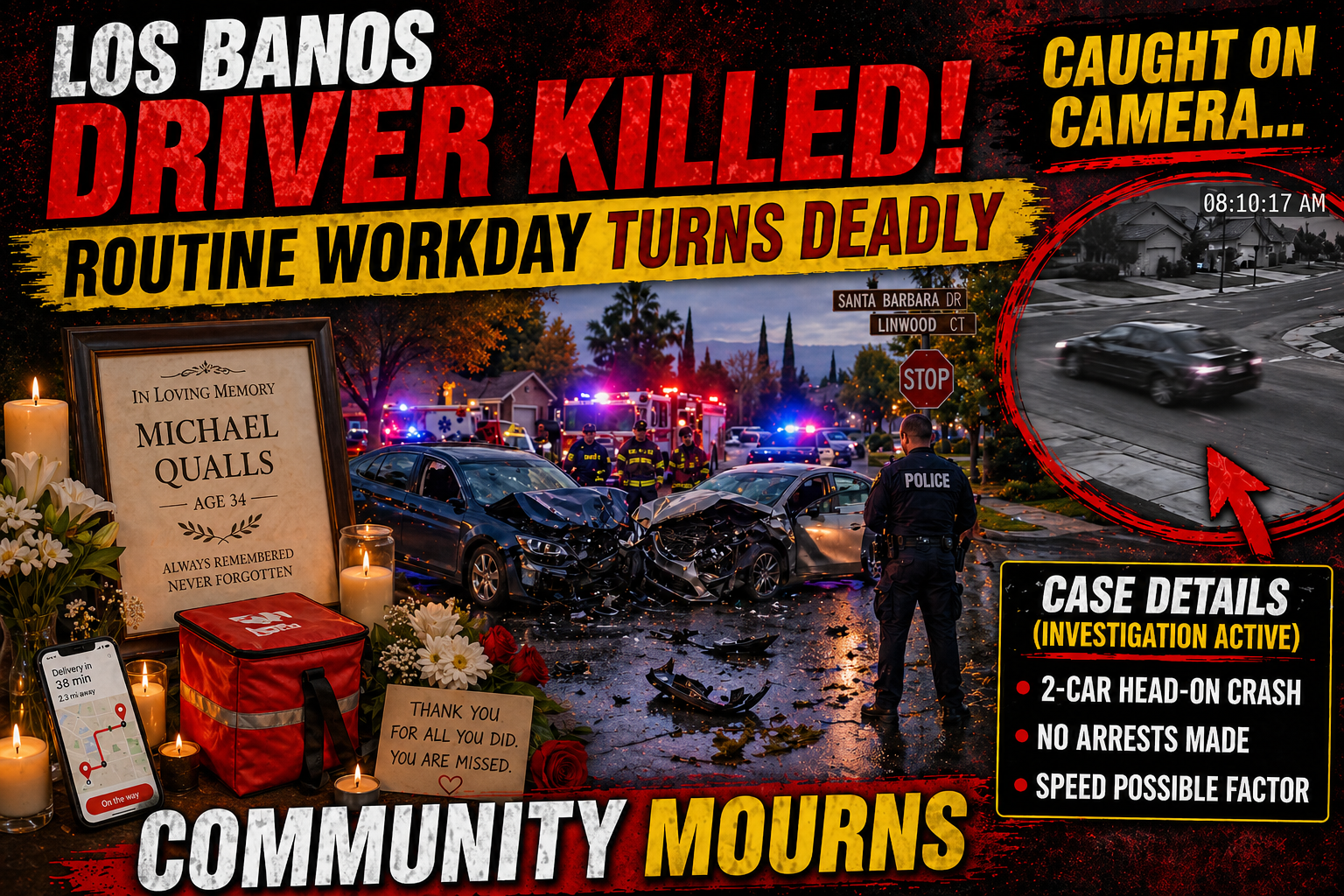
Some images on this website are created using AI. These images are intended for illustrative and creative purposes only and are not meant to depict or represent any actual person.
Goodbye Family, Hello Traffic
For decades, Los Banos has been marketed as an affordable alternative to the Bay Area. The deal sounds simple: "Can't afford to live near your job? Move two counties away and spend several hours a day driving to it." Problem solved. Except it isn't.
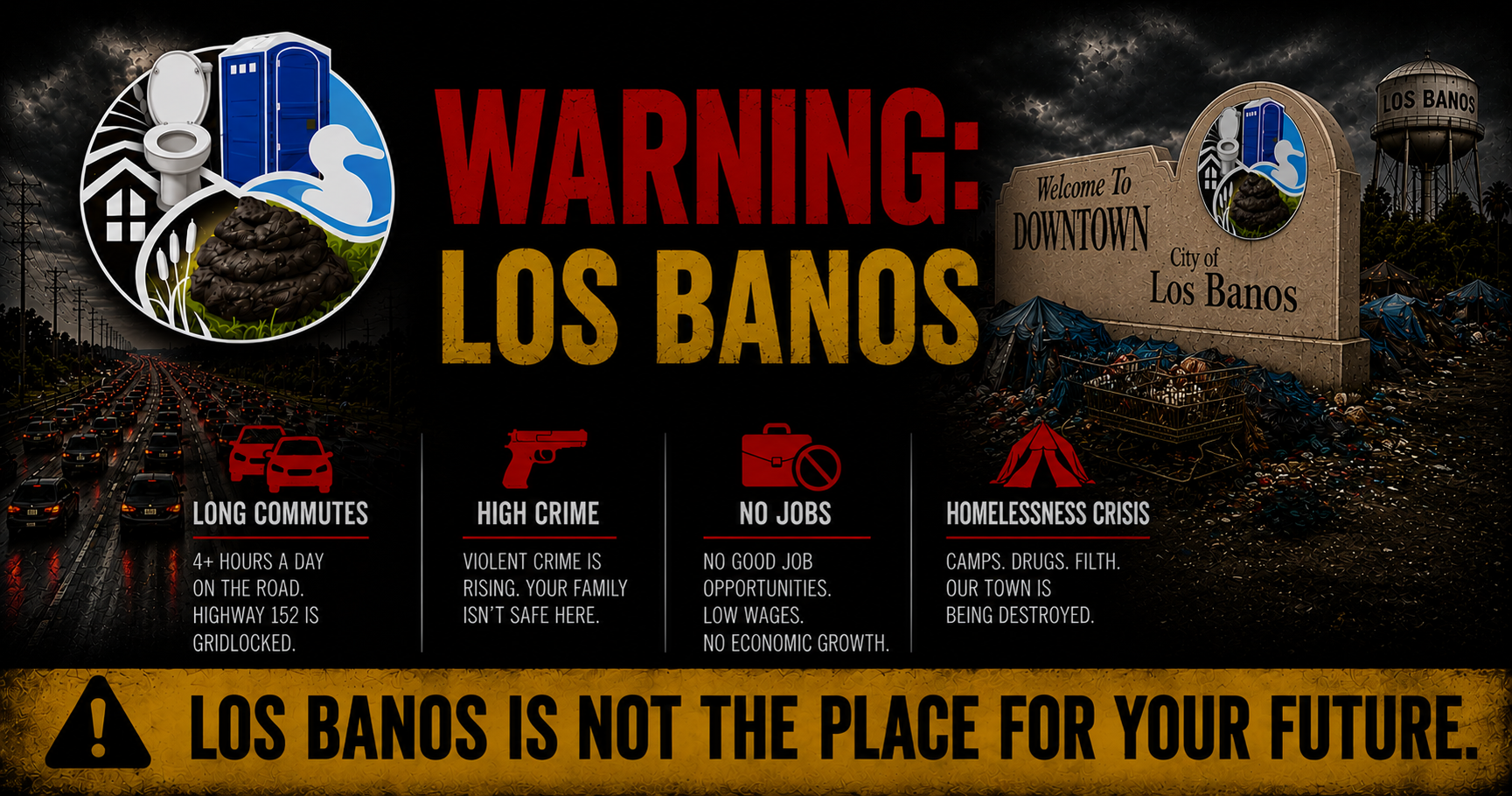
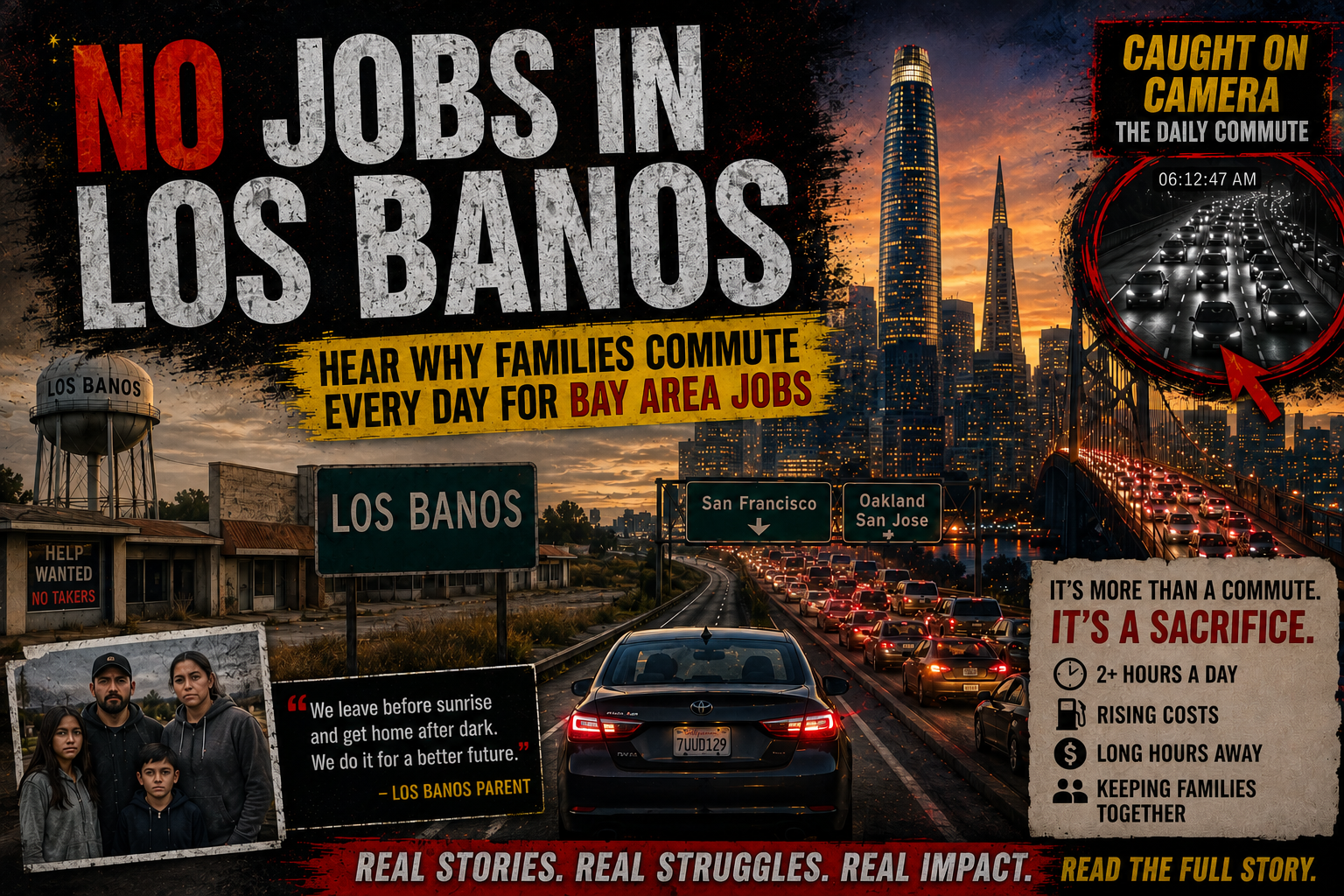
The average Los Banos worker spends nearly an hour getting to work. That's before a single accident, lane closure, rainstorm, overturned truck, fog advisory, or mysterious traffic jam caused by absolutely nothing. If you commute to Silicon Valley, Morgan Hill, Gilroy, or beyond, your car probably knows the route better than your kids know your face.
And then there's SR-152. Officially, it's a state highway. Unofficially, it's a daily stress-management exercise disguised as infrastructure.
Every weekday morning, thousands of commuters funnel into the same corridor, all hoping to make it over Pacheco Pass before the next backup, weather event, construction zone, or fender bender transforms a normal commute into an impromptu parking lot. On some days, traffic flows. On other days, drivers get the unique opportunity to study the same hillside for 45 consecutive minutes.
The irony is hard to miss. Los Banos continues to grow because housing is cheaper than coastal California. But many of the jobs that support local families remain somewhere else. The result is a city filled with residents whose daily routine begins by driving away from the place they live.
Want to work? Drive west. Want better wages? Drive west. Want a career? Drive west. Want to see your family before sunset? Good luck.
Meanwhile, every additional housing development seems to arrive with the same assumption: someone else will figure out the traffic later. Later has arrived.
The region has effectively created a transportation system that depends on thousands of people spending two to four hours a day in a vehicle and then acts surprised when SR-152 becomes overwhelmed.
This isn't just an inconvenience. It's a quality-of-life issue.
It's missed dinners. Missed school events. Missed family time. Missed opportunities.
Something Money Can’t Recover
A regional transportation study found that between 2003 and 2008, more than 2,880 traffic collisions occurred along the SR-152 corridor, resulting in 81 fatalities and 1,718 injuries. During portions of that period, collision rates exceeded statewide averages on comparable roadways.
Crashes continue to occur regularly along the corridor. Fatal collisions, multi-vehicle pileups, chain-reaction crashes, truck collisions, and weather-related incidents routinely shut down lanes and bring traffic to a standstill. Recent examples include fatal crashes near Pacheco Pass and multi-vehicle chain-reaction collisions that temporarily blocked major sections of the route.
For commuters, the impact extends beyond statistics.
Every serious collision means families wondering whether a loved one made it to work safely. Every closure means workers missing shifts, parents missing family commitments, and emergency responders racing to yet another incident on a corridor already stretched beyond its intended purpose.
The reality is simple: when a community depends on long-distance commuting, transportation safety becomes a quality-of-life issue.
Los Banos residents are not just spending more time in traffic. They are spending more time exposed to one of the most dangerous parts of their day.
And unlike housing prices, gasoline costs, or commute times, the consequences of a crash cannot be recovered.